co-operative movment of Nepal : exicting chalangess & opperunities
Although the cooperatives movement in Nepal was started some six decades ago, the sector is still in primitive stage and struggling hard to make its space in the main economic agendas. It is still considered in the least priority sector though it has been able to change the livelihood of rural people in many areas.

According to the record of the Department of Cooperatives (DoC), there are more than 29,000 cooperatives operating in the economy. Of them more than 11,000 are saving and credit cooperatives that have been engaged in taking deposits and providing loan—similar to the functions of a bank. In addition, most of them are working in the urban areas. As per the statistics, around 5,000 (18 percent) are centralized in the Kathmandu valley.
The government has also considered the sector as one of the three pillars of the economy for the past several years. However, there is no strong legal framework and the government’s initiatives to promote and regulate the sector in an effective manner.
A total of 4.2 million people are associated in cooperatives. The sector has been providing direct employment to 50,000 people while it is providing indirect employment to 700,000 people. The sector has played a vital role in reducing poverty mainly in the last decade. At the time when the banks and financial institutions are being reluctant to go to the rural parts of the country, the cooperatives have been providing an effective financial service in a number of the locations.
Despite bearing immense potential in uplifting living condition of the people, the sector has been centre of denigration due to malpractices by a few cooperatives. The sector has now been muddled mainly with the cooperatives related with financial transaction (namely the savings and credit and multipurpose cooperatives) running in the Kathmandu valley.
A number of these cooperatives plunged into problems due to their over exposure in the realty business. After the Nepal Rastra Bank’s policy to cap the housing business, these cooperatives failed to pay back their depositors money due to liquidity crunch. In addition, a number of others face problems due to their malpractices like doing transaction with non members, providing excess loans to their board of directors and neglecting the role of members in decision making among others.
The government’s call to regulate the sector has also been ineffective due to lack of legal provision to ensure good governance. The Cooperative Act 1992 only talks on increasing the number of cooperatives than regulating them. Although the DoC set standard and various directives in different time periods, they are being futile due to lack of adequate resources with the department to monitor the sector.
After the cooperatives fell into problems, two high level investigation committees—one under the central bank’s Deputy Governor Maha Prasad Adhikari and another led by Joint Secretary at the Finance Ministry Baikuntha Aryal were formed. However, their outcomes produced just nothing.
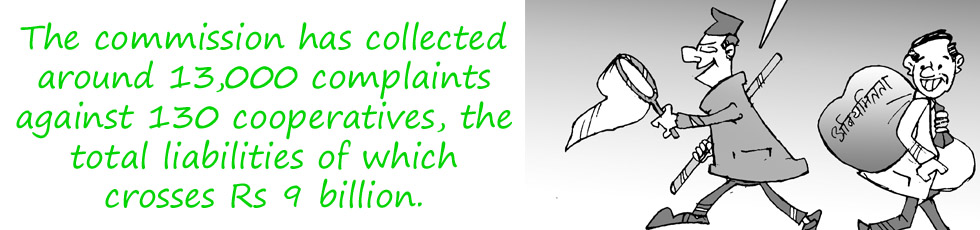
Following mounting pressure from the stakeholders and suffered depositors, the government has formed yet another high level probe commission led by Former Chairman of the Special Court Gauri Bahadur Karki. The commission has collected around 13,000 complaints against 130 cooperatives, the total liabilities of which crosses Rs 9 billion. The investigation work of the commission is underway. It is yet to see how effective outcomes that the commission can produce to safeguard the people’s money with the cooperatives. source : Nepal Cooperative Journalist Society, buletin
अभिलेख
लोकप्रिय


नोक्सान घटाउँदै नाफामुखी यात्रामा राष्ट्रिय सहकारी बैंक
४ मंसिर २०८२, बुधबार
नियामक र सदस्यकै बेवास्ताका कारण सहकारी समस्यामा परेको निष्कर्ष
२२ कार्तिक २०८२, शुक्रबार
राष्ट्रिय सहकारी महासंघको कामु महाप्रबन्धकमा गोपीकृष्ण भण्डारी नियुक्त
३ श्रावण २०८२, शुक्रबारRecent Posts
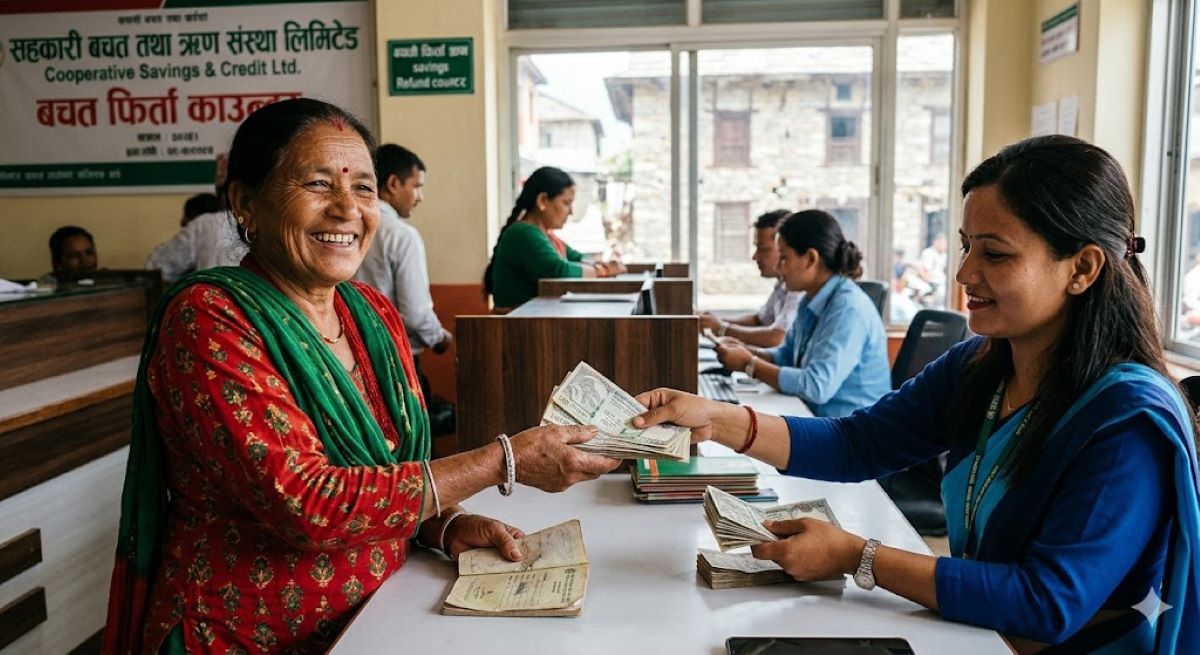
समस्याग्रस्त सहकारीको ऋण असुलीबाट १०५ जनालाई बचत फिर्ता
७ आश्विन २०८३, बुधबार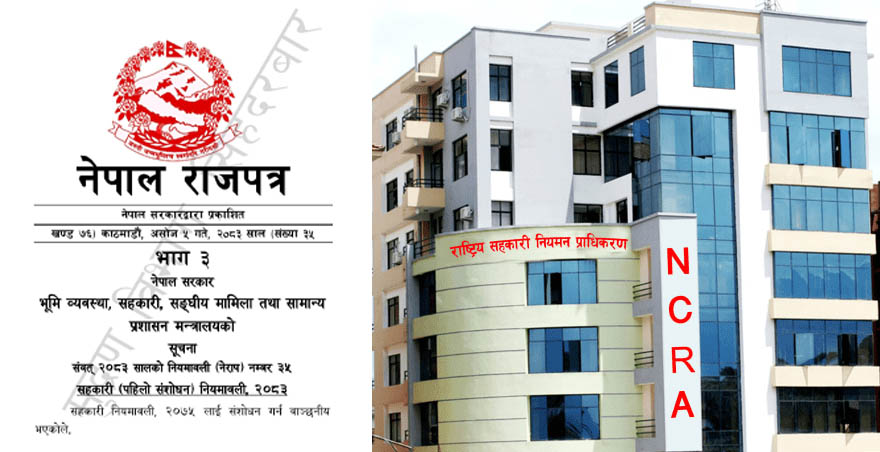
असोजभित्र सहकारीको इजाजतपत्र नवीकरण गर्नुपर्ने, दुई वर्ष छुटे स्वतः खारेज
६ आश्विन २०८३, मंगलवार
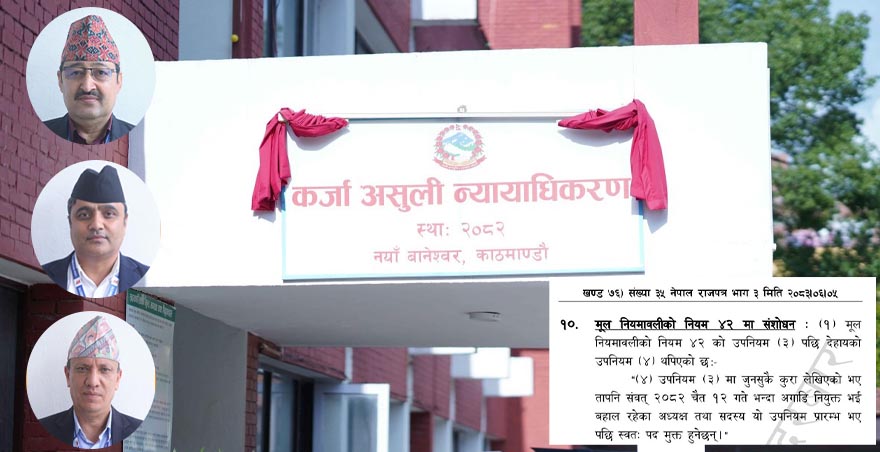
कर्जा असुली न्यायाधिकरणका अध्यक्ष र सदस्य पदमुक्त
६ आश्विन २०८३, मंगलवार